Tech
[Developer Interview ②] “Amid the Real-Time Game of Overcoming the Climate Crisis, We Believe in the Power of Technology to Optimize Uncertainty.” / Tech Lead Hongseok Kim
March 13, 2026
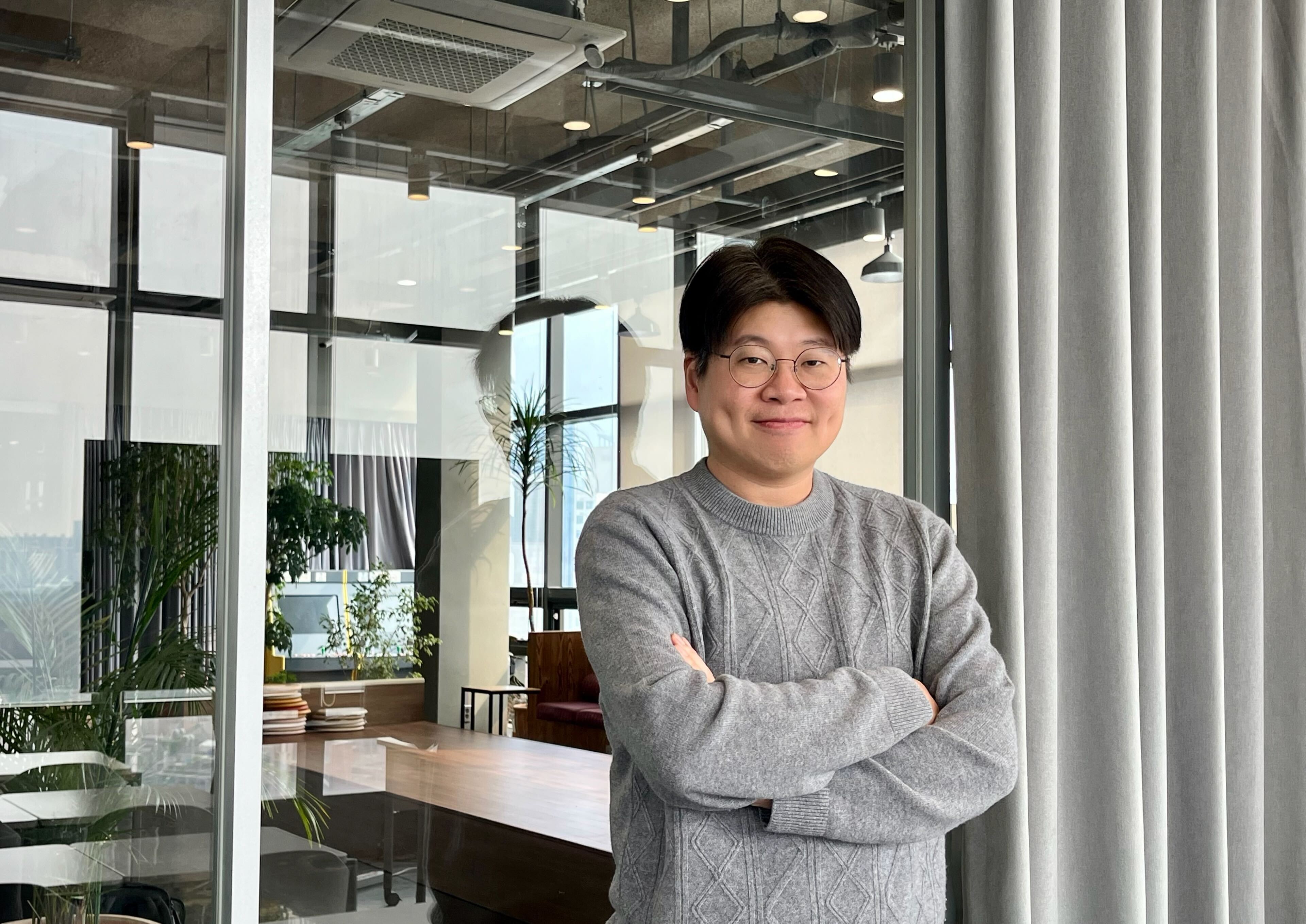
Could you briefly introduce yourself?
Hello, I’m Hongseok Kim, Tech Lead of the GridFlex squad, where we develop technologies that intelligently control energy flows through renewable-energy-based Virtual Power Plants (VPP), Demand Response (DR), and V2G technologies.
Could you tell us about your career before joining 60Hertz?
I actually majored in AI long before it became as popular as it is today. After finishing graduate school, I joined Samsung and spent nine years developing software for semiconductor inspection equipment.
As I began to feel somewhat burnt out doing similar work, I moved to the National Forensic Service (often called NFS). I had been interested in forensic science since my undergraduate years, partly because I loved CSI-style TV shows when I was younger.
At NFS, there are not only forensic pathologists but also research officials from many different technical fields. I worked as an electronics research officer, analyzing evidence and conducting research related to criminal investigations for over ten years. Interestingly, after joining NFS, I actually stopped watching crime investigation dramas. I guess everything looks most beautiful from afar. (laughs)
Why did you choose 60Hertz for your next career step?
When I think about work, I tend to value the meaning behind what I do more than other factors. One of the reasons I moved from a large corporation to a public institution was that I wanted to contribute more directly to society.
My time at NFS was very fulfilling in that regard, but I eventually wanted to tackle a broader challenge—addressing the climate crisis—at Sixty Hertz. It also came from a more personal and realistic concern that, if things continue this way, climate change could seriously affect the lives of my own family.
I had actually known about Sixty Hertz since its early days through news articles and had been following the company’s growth with interest. I missed the opportunity to join in the very early stage because I still had things I wanted to accomplish at my previous workplace. Fortunately, another opportunity came along, and I was able to join after the company had grown to its current scale. In some ways, I feel a little sorry to those who went through the hardships of the early days without me.
How is 60Hertz different from your previous workplaces?
Compared to my previous roles where I dealt with relatively static data, at Sixty Hertz I now work with highly dynamic data, which has exposed me to many new data structures and methodologies.
The climate/weather and energy domains are constantly evolving. In some sense, there is no such thing as a final “completion” or a single “correct answer.” In particular, the work we do at Sixty Hertz—predicting and distributing renewable energy—is essentially a real-time game of optimizing uncertainty in weather and energy through IT technology.
The reward of that game is ultimately energy transition and overcoming the climate crisis. Because energy is so closely tied to humanity’s fundamental challenges and continues to evolve dynamically, it feels like a domain where new problems to solve will continue to emerge as long as humanity exists.
How are you incorporationg the lastest AI trends into your work?
Many people already feel that AI is no longer confined to specific domains but represents a revolutionary moment for humanity as a whole.
Not long ago, AI was simply a useful tool when used well. Now, even basic usage can significantly boost productivity. As a result, the ability to define “which problem to solve” has become more important than simply figuring out “how to implement something.”
These days, I often define the problem and the data myself, and then rely on AI to help with the final solutions. As mentioned earlier, the problems we deal with are extremely dynamic. Just because something works well now does not guarantee it will continue to work well in the future. Systems need to be continuously adjusted depending on time and external conditions.
In the past, humans had to determine when adjustments were needed, modify the data, and implement the changes themselves. Today, AI enables us to automate much of this process, allowing software to optimize and evolve on its own. Our team is also building continuous experimentation and feedback loops to reduce uncertainty and constantly exploring the most efficient ways to work in this changing environment.
What kind of colleagues do you enjoy working with?
I enjoy working with people who can clearly define the problems that need to be solved or the specifications that need to be implemented.
To develop that ability, software skills are certainly important, but it’s equally important to quickly acquire domain knowledge when needed and maintain a proactive attitude. Even when working on the same problem, the final output can differ significantly between someone who approaches it with curiosity and understanding versus someone who simply tries to produce an answer quickly.
Ultimately, it comes down to continuous learning.
Beyond that, I value mutual respect and a sense of connection among colleagues. Thanks to AI, differences in individual knowledge or abilities may appear to be shrinking. However, no one can accomplish everything alone. The ability to empathize, share knowledge, and complement each other’s strengths and weaknesses will always remain important.
Of course, that doesn’t mean ability is unimportant. The people at Sixty Hertz already possess outstanding capabilities. That’s why I tend to emphasize the attitude beyond ability.
How would you like to see your team grow?
If I had to summarize it in one sentence, I want this to be a team where the experience of working here becomes a significant advantage in someone’s life and career.
For example, if someone says, “I worked at Sixty Hertz for 20 years,” I’d love for that alone to be a credential that makes them desirable anywhere without further explanation. Of course, I mentioned “20 years” because until Sixty Hertz turns 20, we won’t let them leave. (laughs)
Since joining Sixty Hertz, I’ve often been impressed by how intensely everyone adopts and applies new technologies—whether that’s due to the nature of the domain or the startup environment. I believe my role as a leader is to ensure that each individual’s efforts translate into meaningful results.
My goal is to help both the team members and the company succeed together. It may sound idealistic, but it’s a challenging goal, and I constantly reflect on what I need to do as a leader to help us get there.
Do you have a message for those who hope to become our new colleagues?
Since 60Hertz maintains a rigorous and high standard for hiring, if you do join us, I believe you can take real pride in working here.
If new colleagues and existing team members can complement each other’s strengths and continue learning from one another, we can build a truly outstanding organization. And when you work with great colleagues in a great organization, I believe any work can become enjoyable.
We’re always looking forward to meeting people who want to help create that kind of experience together.