Tech
[Developer Interview ①] “I want to focus on solving real-world problems with practical development, not be constrained by technology.” Tech Lead, Sungwon Choi
December 29, 2025
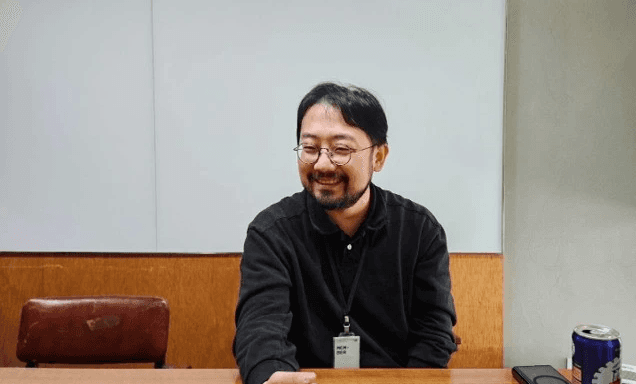
Could you briefly introduce yourself?
Hello, I’m Sungwon Choi, leading the development organization at 60Hertz. I’ve been with the company for about three years, mainly working on service development while handling a variety of responsibilities. Through my experience of understanding both technology and business, I constantly think about the direction and value of our services from a developer’s perspective.
Could you tell us about your career before joining 60Hertz?
Around 2009, when the iPhone had just been released and the App Store emerged as a new platform, I started a company with a senior from university after saying, “Why don’t we try building our own app?” I joined as CTO and developed an app called Sseuim epub, which we hoped would be a service used in socially meaningful ways.
Later, the company was acquired by a content company that is now known as Kakao Entertainment. I initially worked as an iOS developer, then expanded into web development, and from 2017 onward, I focused on frontend development. I spent about 10 years at Kakao Entertainment, including roughly three years as a team lead managing a development team.
How did you end up joining 60Hertz?
60Hertz reached out to me first. At the time, I was working as a team lead at Kakao Entertainment and was deeply involved in a large project, so I initially declined the offer. Interestingly enough, just as that project was wrapping up, they contacted me again. (laughs)
At that point, I was reflecting on something I had been feeling for a while. As technology became more standardized, the criteria for choosing platforms seemed to be shifting from “technology” to “content” or “domain value.” I also felt that the impact I could create purely through technology was gradually diminishing. That’s when the renewable energy domain of 60Hertz felt both new and compelling. It was a field I hadn’t experienced before, yet one with clear growth potential and strong social impact.
What was your impression of the renewable energy domain after joining?
It was very different from the content platforms I had worked on before. To be honest, from a purely technical standpoint, the environment could be described as somewhat underdeveloped, and developers who enjoy cutting-edge technologies and trends might initially feel some disappointment.
However, I believe what truly matters is where and how you apply the skills you have. So I didn’t see this environment as a limitation. Especially now, as AI technologies advance rapidly, the importance is shifting from the difficulty of specific technologies to understanding the overall structure and defining problems well. In that sense, this environment actually feels very aligned with the times. For developers who want to focus on solving real-world problems without being tied to a specific tech stack, I believe this is a highly meaningful domain.
You touched on this briefly, but how would you describe yourself as a developer?
“I value the depth of problem-solving more than the depth of technology.”
I’m a developer who enjoys solving customer problems and delivering tangible results. Within the team, I often say, “Let’s be practical.”
When I was an undergraduate working as a student assistant, I once received a request to build a text segmentation program for plagiarism detection. I didn’t know how to build a Windows application at the time, so I implemented a simple console program instead—and they used it for a long time. If I had said, “I can’t do this,” or “I don’t know that technology,” the problem would never have been solved. I focused on the essence of the requirement and solved it in the most feasible way.
Customers often talk about what they need rather than why they need it. In those moments, I believe developers should step forward, define the problem more clearly, and propose realistic solutions. I don’t think this mindset is any different in the renewable energy field.
What are the developers at 60Hertz like?
Many of our developers have a strong interest in the business itself. From a developer’s standpoint, not understanding the broader business context can be confusing, yet it’s rare for that context to be explained in a developer-friendly way. Because I’ve experienced both development and business, when I share business perspectives in a way developers can relate to, the team listens with great interest and actively exchanges ideas.
As for our tech leads—they’re truly something to be proud of. Not only are they highly capable technically, but when problems arise, they dig in relentlessly until they find a solution. Even when answers aren’t immediately clear, they eventually create them. That reliability and mutual trust are what I believe to be the greatest strengths of our team.
How would you describe the team culture within the development organization?
Whenever a new developer joins, there’s something I always say:
“Don’t fall too deeply in love with your code.”
We don’t have a culture where “the code is me.” In code reviews, anyone can share rational opinions regardless of title or position. When opinions differ, we bring more people into the discussion. And if it’s still hard to decide, we encourage respecting a colleague’s perspective rather than pushing one’s own view to the end. If the outcomes are similar, teamwork matters more. Thanks to this approach, we’ve had very few interpersonal issues so far.
What kind of team do you hope the development team will become?
First, I want us to embrace AI more actively. At the company level, we already support various tools, and internally we’re developing tools that leverage AI to produce outputs. Going forward, I’d like to see this flow naturally integrated into our culture.
Another goal is to become a more predictable team. As both the company and the team have grown rapidly, organizational stability has been a challenge. Now, we want to move toward a phase where performance and outcomes are more predictable.
What kind of people would you like to see join the team?
I’d love to work with people who ask what problems customers truly want to solve and try to understand the essence of those problems. People who don’t say, “This isn’t my problem,” but instead think, “Let me try to solve it.” Those who see themselves as problem solvers and focus not on why something can’t be done, but on how it can be done.
Finally, for those who are interested, what do you value most in interviews?
I ask many questions that don’t have a single correct answer—for example, about one’s long-term direction as a developer. I see development as a tool, so I don’t believe you must have a fixed goal. What I want to understand is how far someone is looking ahead and what kinds of questions they’re thinking about. Rather than a “right” answer, I appreciate honest reflections on how they usually think.